Minimalism in Interior Design: Discipline That Creates Freedom
Minimalism in interior design isn't emptiness — it's precise selection. Here's how to build a space with nothing extra, yet still warm and livable.
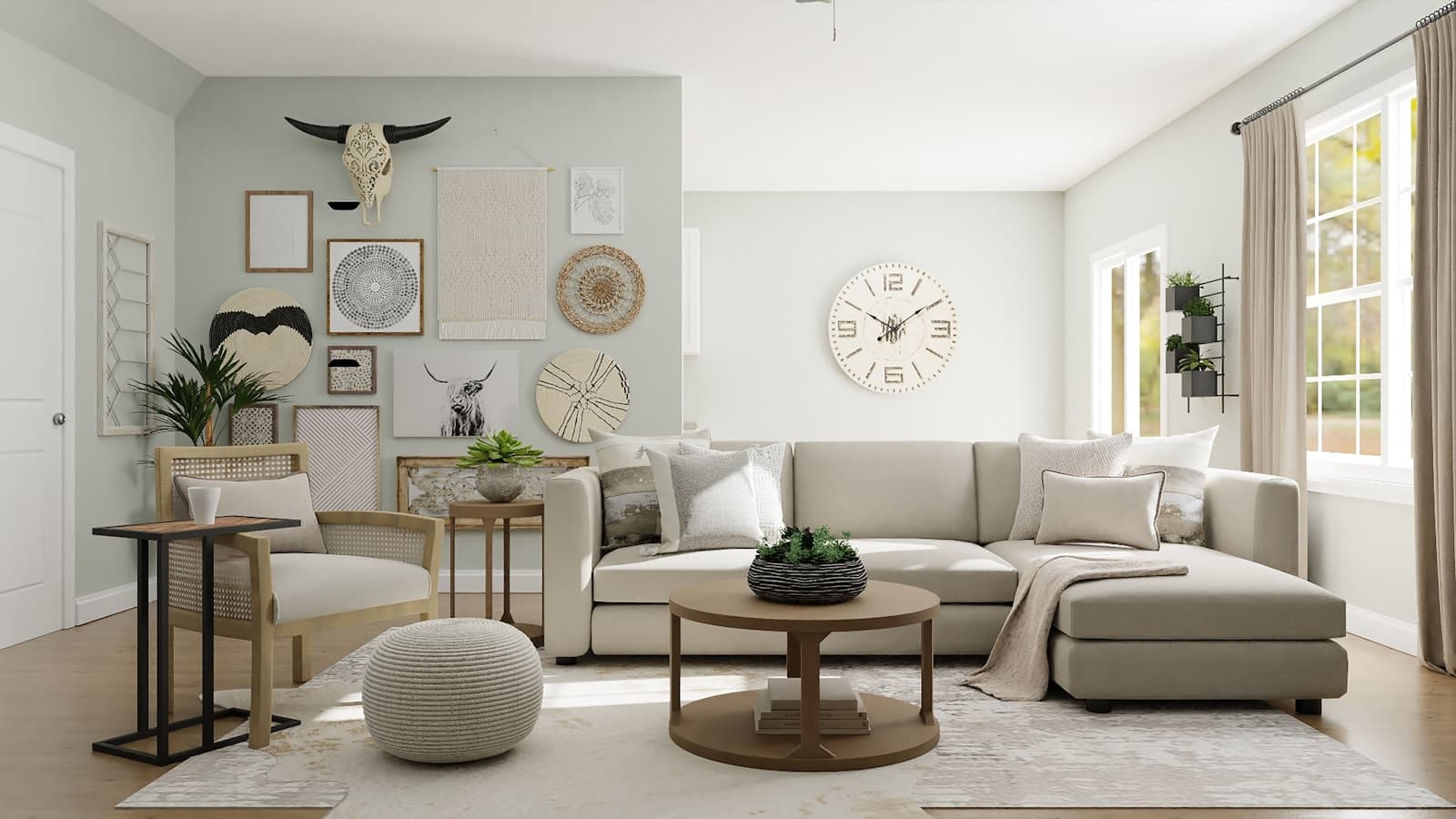
Minimalism in interior design is often summed up in one word — "empty." That's a misconception that keeps many people from committing to it: they fear ending up with a cold box devoid of anything personal. In reality, minimalism isn't about giving things up — it's about careful selection: a space keeps only what's genuinely needed and loved, while everything incidental and excessive is set aside. It's one of the most demanding disciplines in interior design, and one of the most rewarding when carried through to the end rather than abandoned halfway between "I want minimalism" and "I'm not ready to part with half my belongings."
What Minimalism in Interior Design Actually Means
Minimalism as an aesthetic took shape in the mid-20th century at the intersection of modernist architecture, Japanese spatial culture and Scandinavian practicality. Its guiding principle is "less is more": less means more, provided the little that remains is executed flawlessly. In an interior, that means rejecting decoration for decoration's sake — every object either serves a function or carries meaning strong enough to earn its visible place. Minimalism tolerates no compromises or half-measures, which is exactly why it so rarely happens by accident, without a deliberate plan and discipline at every stage, from furniture placement down to the choice of a door handle.
Where Minimalism Came From
Minimalism's roots lie in early-20th-century modernist architecture, where Mies van der Rohe coined the formula "less is more" and Le Corbusier described the house as a "machine for living," where every element is justified by function. In parallel, Japanese aesthetics shaped the movement — the idea of "ma," empty space that isn't empty but full of potential, and wabi-sabi, which prizes simplicity and the natural imperfection of materials. In the 1980s and 90s these ideas merged with a broader fatigue over excessive postmodern decoration, and minimalism emerged as a design language in its own right — restrained, but not cold, when approached thoughtfully rather than mechanically.
Key Features
- Clean surfaces — a minimum of visible objects, everything else tucked into storage.
- Simple geometry — straight lines and concise forms in furniture and architecture.
- A limited palette — one or two base tones, with no busy decoration.
- Deliberate lighting — light as the main tool for atmosphere, instead of ornament.
- Quality over quantity — fewer things, each in its place and built to last.
- Hidden function — appliances, storage and engineering kept out of sight.
How Minimalism Differs From Modern Style
Minimalism is often confused with modern style, but the distinction is fundamental. Modern style allows a decorative accent when it earns its place and supports the overall look — minimalism doesn't permit that luxury. The question here isn't "do I like this object," but "does the space actually need it." If the answer isn't an unambiguous yes, the object has no place in the interior. That rigor demands discipline not just at the design stage but in everyday life: minimalism is easily undone by one impulse purchase or a pile of things left on the table "for later" — something modern style forgives far more readily.
Materials and Palette
Materials in a minimalist interior are honest and understated: concrete, light wood, stone, matte metal, quality textiles without pattern. They aren't hidden under decoration — the texture and natural tone of the material are already expressive enough on their own. The palette is almost always monochromatic: white, grey, sand, with black reserved as an accent rather than a backdrop. Colour here works not through vibrancy but through subtle shifts within a single tone, and through contrast of texture — matte against glossy, rough against smooth. That restraint makes a space feel visually larger and calmer: the eye has nothing to catch on except light, form and the quality of the surface itself.
Minimalism in an Ordinary Apartment
Minimalism doesn't require vast square footage or expensive finishes — it requires order and precisely planned storage. The first step is getting rid of the excess, not buying new furniture: minimalism starts with decluttering, not renovation. The second is deciding where every single object will live, so surfaces stay clear all the time, not just on photo day. This matters even more in a small apartment: a minimalist approach to storage frees up space visually far more effectively than any reconfiguration. Furniture is chosen to be concise and multifunctional rather than "sized for growth" — better to own fewer pieces, each exactly right for its purpose and built for real daily life rather than a showroom.
Minimalism isn't about what you remove — it's about what earns the right to stay.
Minimalism suits those willing to trade a little discipline for clarity: it doesn't forgive clutter and demands constant attention to what's allowed into the home. In return, it offers a rare feeling — a space where nothing distracts or presses in, and light, form and quiet work together. It isn't the easiest path in interior design, but it's one of the most honest: there's nowhere to hide a careless decision, which means every detail is a deliberate choice by both designer and client, not the result of a compromise or a corner cut at the final stage.