Eco Style in Interior Design: Decorating a Home Without Artifice
Eco style in interior design isn't a pot plant on the windowsill — it's a system of materials, light and palette built on the honesty of texture. Here's what it's actually made of, and the mistakes that turn it into a plastic imitation.
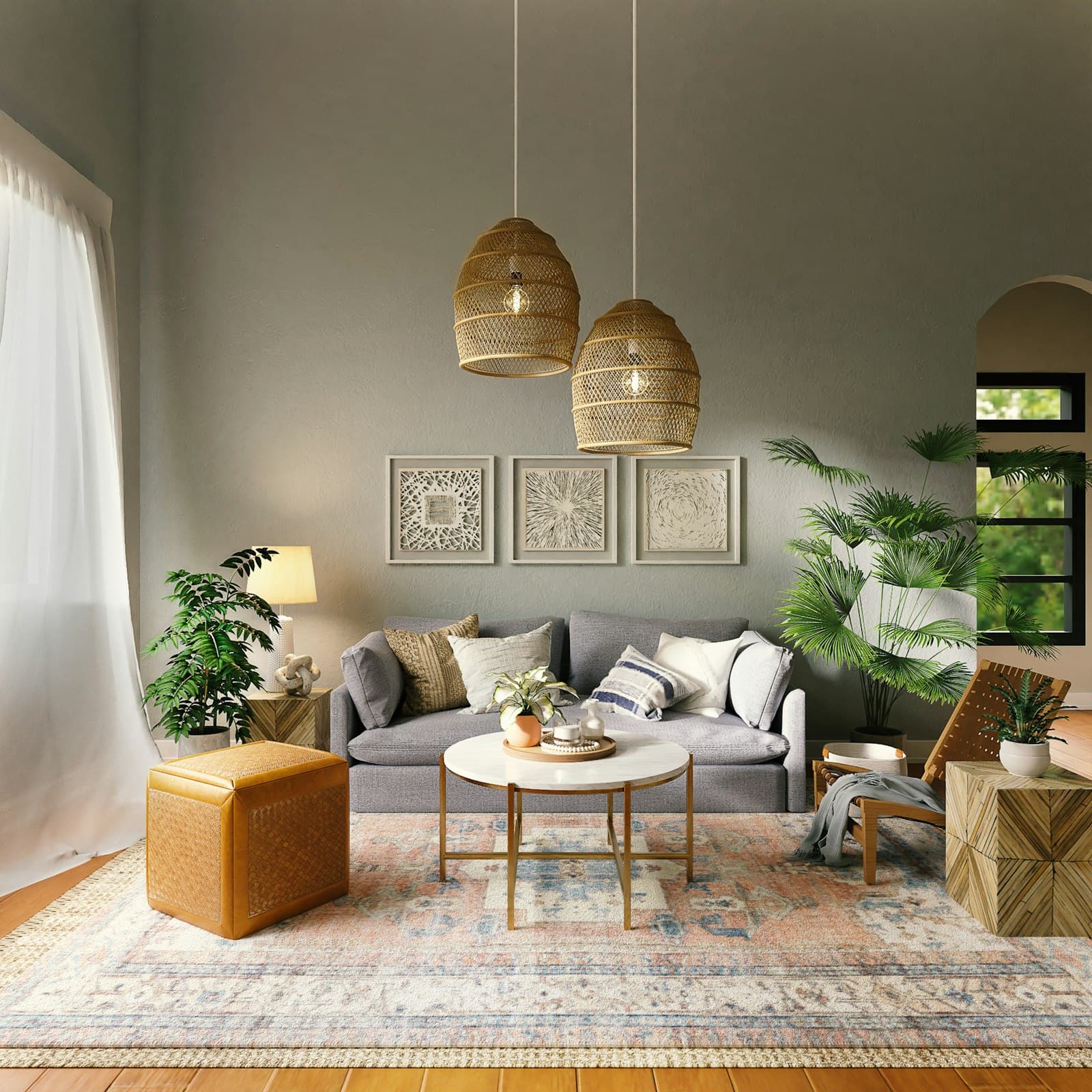
Eco style in interior design is often mistaken for a handful of pot plants on the windowsill and furniture that mimics wood — but behind it sits a far more coherent idea. Eco style in interior design isn't built around decorative signals of nature; it's built around materials that actually breathe, age naturally, and don't require aggressive chemical treatment. This direction didn't appear as a passing trend but as a response to fatigue with glossy, sterile interiors that look flawless yet feel cold. Here's what it's actually made of, and why a natural aesthetic is not about having less furniture but about the honesty of the material.
Eco Style in Interior Design: What It Actually Means
Eco style in interior design is first and foremost a choice of materials and their origin, not a shade of green on the wall. At its core: solid wood without heavy gloss lacquer, natural textiles, stone, clay, cork, and reclaimed materials instead of plastic and synthetics. The logic of the space matters too: plenty of natural light, minimal unnecessary partitions, free air circulation. Eco style rarely looks flawlessly glossy — it allows for visible wood grain, the unevenness of unfired clay, the slight asymmetry of handwork. That's what sets it apart from the Nordic direction, where natural materials are also central but the aesthetic is more refined and graphic — you can read more about the difference in the piece on Scandinavian style in interior design.
The Materials Eco Style in Interior Design Is Built From
- Solid wood and veneer without glossy lacquer — oil or wax is preferred, since it preserves the material's texture and scent.
- Natural textiles — linen, cotton, wool, jute — instead of synthetic fabrics that don't breathe and build up static.
- Stone, clay, unfired plaster and cork — materials with a living, slightly uneven texture instead of smooth plastic.
- Reclaimed materials and salvaged wood — used in place of new material wherever it's possible without losing durability.
Color, Light and Plants — One System, Not Decoration
The eco style palette is built on earthy, muted tones — beige, ochre, olive, terracotta, warm grey — without bright synthetic accents. It's worth planning the logic of such a palette in advance rather than picking textiles to match walls that are already finished — the general principle of building a palette is covered in the piece on color palette in interior design. Plants in eco style aren't a final touch but part of the system: they regulate humidity, create vertical accents, and visually tie the interior to the materials around it. Light works differently here too, compared with more rigid styles: warm, diffused lighting is preferred, since it brings out the texture of wood and clay rather than flattening the space into plain white light.
Eco style isn't about adding plants to an interior — it's about the interior itself behaving like part of a natural cycle: ageing, breathing and changing over time.
Common Mistakes When Decorating in Eco Style
- Plastic imitations of wood and stone instead of the real materials — eco style relies on the honesty of texture, and a fake reads instantly.
- Too much artificial decorative greenery instead of live plants — this contradicts the whole idea of the direction.
- Cold white light instead of warm — it leaves natural materials looking flat and sterile.
- Mixing eco style with bright glossy decor — excess shine breaks the sense of natural simplicity.
Eco style in interior design only works as a system: materials, light, palette and plants need to be planned together, not bolted on separately after the renovation is done. Anyone who wants to work through this logic on their own project — from choosing materials to the final layout — should take a look at the "House of Your Dreams" course, which walks through the path from idea to completion step by step.