Neoclassical Interior Design: Classical Precision Without Excess
Neoclassical interior design brings classical proportion without heavy ornament — here's how it differs from Art Deco and how to adapt it for a modern apartment.
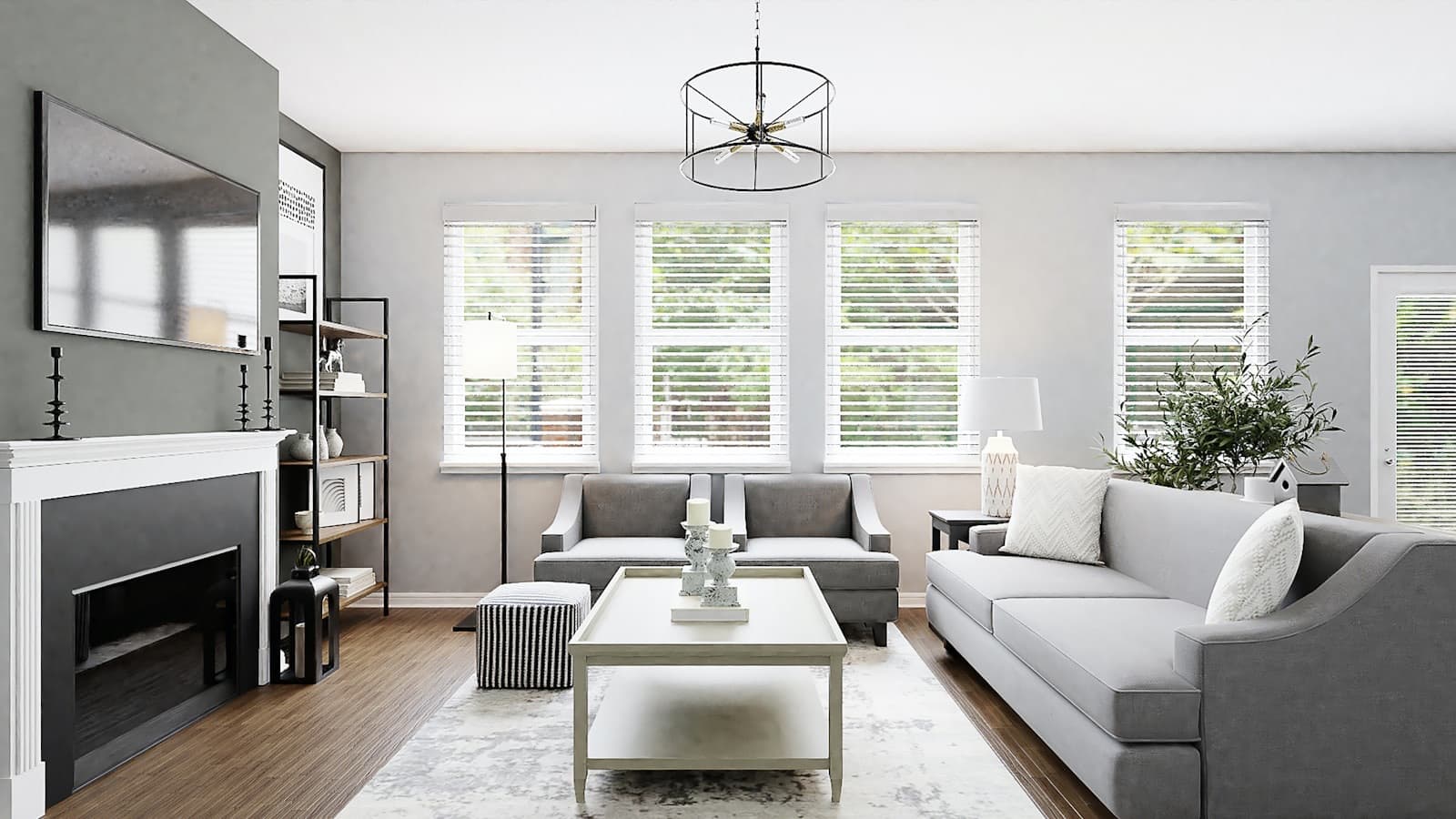
Neoclassical interior design is one of the most durable styles on the market: it never goes out of fashion because it rests on proportion, not on trend. Unlike historical classicism with its abundance of mouldings and gilding, neoclassicism keeps only the essentials — symmetry, clear lines, noble materials — and strips away excess decoration. The result is an interior that reads as both expensive and calm at once: without the ornateness of a palace, but with the same inner discipline of form. That restraint is exactly what makes neoclassical style a universal choice, for a spacious apartment and a compact studio alike.
What Neoclassical Interior Design Actually Means
Neoclassicism is a reinterpretation of the classical order for the needs of modern life. Columns, cornices and moulded decoration don't disappear entirely — they become thinner and more precise: a narrow profile instead of a heavy plaster cornice, matte metal or light wood instead of gilding. The style rests on symmetry and a clear hierarchy of elements: a centred wall composition, paired furniture pieces, even proportions for windows and doorways. Neoclassicism tolerates no randomness in the layout — every piece of furniture sits where it does not by taste but by a rule of proportion inherited from antique architecture.
Where Neoclassicism Came From
Neoclassicism took shape as an independent movement in the 18th century, when European architects turned to the antique heritage in reaction against the ornament-heavy Baroque and Rococo. The excavations of Pompeii and Herculaneum revived a taste for the strict proportions of Greek and Roman orders, and architects such as Robert Adam in England and Karl Friedrich Schinkel in Germany shaped a language where symmetry and clarity of form mattered more than ornamental abundance. Over the 20th century this heritage was reinterpreted more than once, and today's neoclassical interior design is already its third or fourth generation — adapted to open floor plans and the practicality of a modern apartment.
Key Features
- Symmetry and axial composition — furniture and decor arranged in pairs around a centre.
- Classical proportion — high ceilings visually supported by vertical wall division.
- Restrained decoration — a slim moulding and cornice instead of heavy plasterwork.
- Noble materials — natural stone, fine wood, brass and bronze.
- A calm palette — light, powdery tones with occasional deep accents.
- Individually chosen furniture — pieces with a clear sense of form, not an anonymous suite.
How Neoclassicism Differs From Art Deco
Neoclassicism is often confused with Art Deco — both styles favour symmetry and costly materials. But their ornamental logic runs in opposite directions. Art Deco looks toward an industrial future: its geometry — zigzags, stepped silhouettes, stylised sunbursts — has nothing to do with antique heritage. Neoclassicism, by contrast, refers directly to the historical order: the column, the cornice, botanical ornament, even if in a lighter, contemporary reading. If Art Deco is about theatrical gesture and the confidence of a new era, neoclassicism is about continuity and a timeless harmony of proportion that works regardless of any particular decade's fashion.
Materials and Palette
In a neoclassical interior, materials are chosen for their nobility rather than for shine on its own: natural stone or a convincing imitation for floors and countertops, light-to-medium-toned wood for furniture, and metal — brass or aged bronze — as an accent in hardware and light fixtures. The palette rests on light, slightly powdery tones — milk white, beige, light grey, dusty green or blue — with occasional deep inserts such as graphite or burgundy. This range visually expands a space and keeps a sense of lightness even within a rich, symmetrical composition of walls and furniture.
Neoclassical Style in an Ordinary Apartment
Bringing neoclassicism into a standard apartment is easier than it sounds, as long as you don't chase palace-scale grandeur. Start with geometry — even out the proportions of openings and wall panels, add a slim moulding around the ceiling perimeter. Next comes furniture: one or two pieces with a strong classical silhouette (an armchair, a console, a framed mirror) will set the tone for the whole room, while the rest can stay understated. This approach fits well with the Italian design methodology, where style is a precise calculation rather than a set of random details. If you're only just planning a renovation and choosing a style, it helps to understand the sequence of decisions in advance — for instance, on the “Home of Your Dreams” course, which walks through everything from space planning to handover.
Neoclassicism doesn't imitate a palace — it borrows only its discipline of proportion.
Neoclassical interior design suits those who want a sense of quality without visual noise — a style that doesn't age with the trends, because it rests on proportion rather than decorative fashion. It's an interior for people who value continuity and a quiet confidence of form over experimentation for its own sake. A well-executed neoclassical design project always balances a historical quotation with the practicality of modern life, so the space never becomes a museum replica and stays a home that's comfortable to live in every day.