Porcelain Tile or Ceramic Tile: How to Choose Flooring and Wall Covering
Porcelain tile or ceramic tile — what actually differs in practice: durability, water absorption and installation, so the flooring choice doesn't turn into a costly mistake.
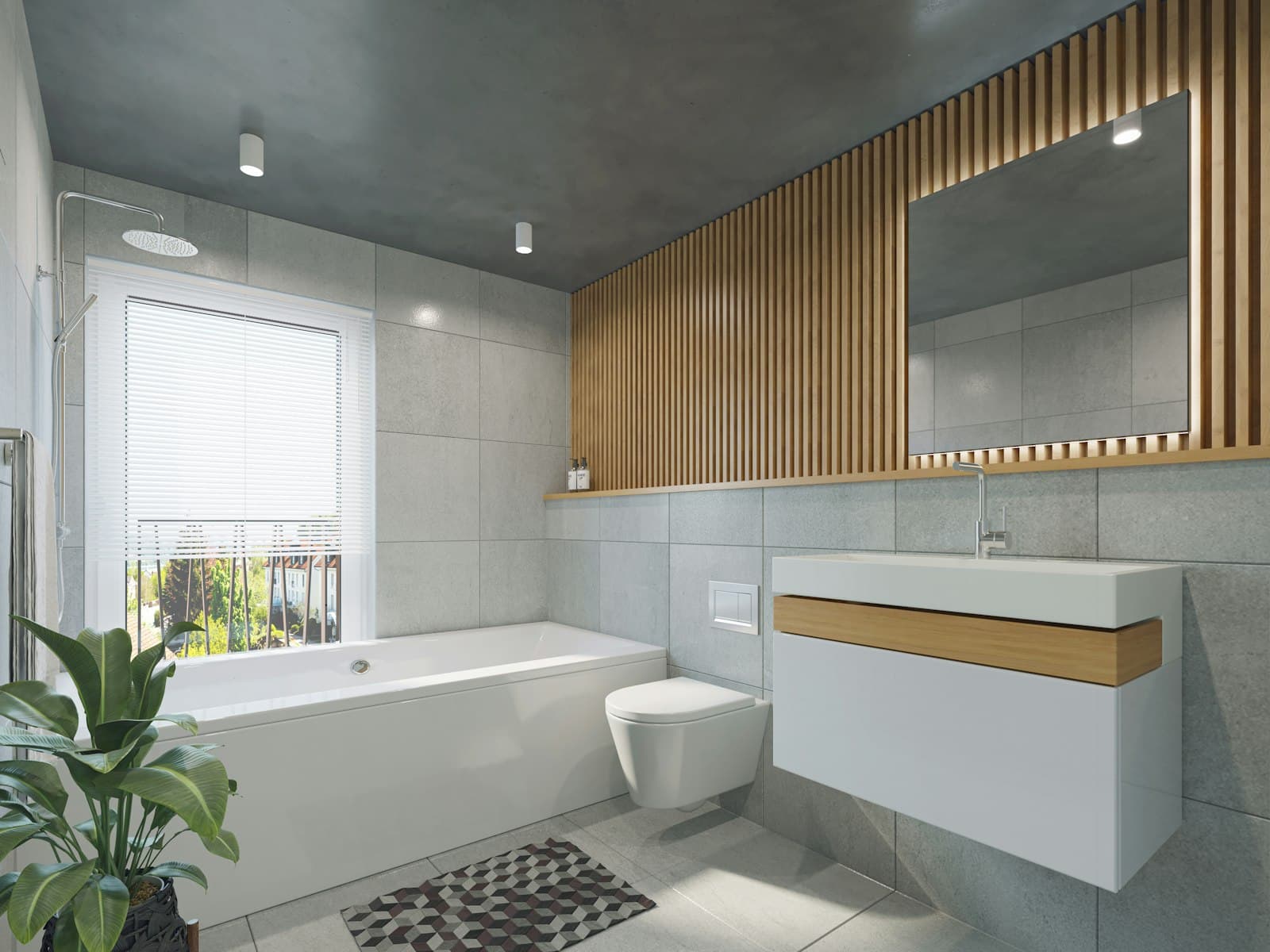
Porcelain tile or ceramic tile is a question that comes up at the threshold of almost every renovation where ceramics are going on the floor or walls — in the bathroom, the kitchen, the entryway. Both materials look similar on a showroom wall, both are sold by the square metre, and both promise durability, but behind the glossy surface lie different manufacturing processes, different strength, and a different cost of getting the choice wrong. Here's what actually separates porcelain tile from ceramic tile, and how to choose a covering that won't disappoint a couple of years into daily use.
Porcelain Tile or Ceramic Tile: The Difference in Composition and Properties
Ceramic tile is made from clay and mineral additives, fired at a relatively low temperature, and finished with a layer of glaze — the glaze is what carries the pattern and the shine. Porcelain tile is made differently: a mix of clay, quartz sand and feldspar is pressed under high pressure and fired at a temperature that sinters the body almost to the density of stone. The result is markedly lower water absorption and a uniform structure that holds even at a chip (a quality ceramic tile reveals a lighter body under a chip, while porcelain shows the same pattern all the way through). This difference in manufacturing is exactly what decides where each material lasts and where it eventually lets you down.
Porcelain Tile: Strengths and Weaknesses
- Minimal water absorption — porcelain barely absorbs moisture, so it resists staining and constant contact with water.
- High mechanical strength — it withstands point impacts and everyday abrasives, which matters for entryway and kitchen floors.
- Uniform colour through the full thickness — a chipped edge is far less visible than on glazed ceramic.
- Demanding to install — heavier and stiffer than ordinary tile; large-format slabs need experienced installers and a perfectly level base.
- Colder underfoot without heating — worth planning underfloor heating wherever porcelain covers a large area.
Ceramic Tile: Strengths and Weaknesses
- A rich choice of textures and patterns — the glazed surface allows fine printing, relief and imitations that are harder to reproduce in porcelain.
- Easier to work with — lighter weight and a thinner profile simplify installation on irregular surfaces and in small rooms.
- Lower mechanical strength — the glaze layer can develop a network of hairline cracks over time under repeated impact.
- A chip shows more clearly — a knocked corner stands out against the lighter body underneath.
- More comfortable for walls — the lighter weight reduces the load on the adhesive layer when cladding vertical surfaces.
Where Porcelain Works Better, and Where Ceramic Does
For floors in high-traffic areas with a real risk of water — the entryway, the kitchen, the bathroom — porcelain tile is the more practical choice: it wears less and copes better with humidity swings. The article on bathroom design explains in detail why waterproofing and floor covering in a bathroom are engineering questions, not decorative ones — porcelain usually covers the floor there, while ceramic tile stays on the walls, where pattern and palette matter more than sheer abrasion resistance. On a kitchen backsplash, ceramic tile often wins instead — it's easier to cut around outlets and the hood, and the range of patterns makes it possible to build an accent zone without redoing the whole kitchen floor.
A mistake in choosing between porcelain and ceramic tile is rarely visible on installation day — it shows up a year or two later, when the glaze on an entryway floor spreads into a web of cracks exactly where the tougher material should have gone in the first place.
Format, Texture and Installation
Large-format porcelain slabs make a room look bigger by cutting down the number of grout lines, but they demand a perfectly level base and an experienced crew — otherwise a slab cracks at the smallest dip in the screed. Mid-size ceramic tile forgives small irregularities better and stays a practical choice wherever redoing the whole screed isn't worth it. A matte finish on either material shows less water residue and slips less, which matters most on the floor — the same logic applies to kitchen interior design, where a matte floor near the work zone lowers the risk of slipping next to the stove and the sink.
How to Choose: Practical Criteria
- Wear rating (PEI) — the higher the traffic in the room, the higher the rating the covering needs.
- Water absorption rate — it should be minimal for a bathroom or kitchen, and can be higher for dry rooms.
- Format and layout — a large format looks striking, but cutting it to a complex room shape can increase material waste.
- Slip resistance (R-rating) — critical for bathroom floors and entryways, where water and outdoor dirt end up most often.
- Compatibility with underfloor heating — not every adhesive or every format performs equally well over heating elements.
The final decision almost never comes down to one material for the whole home — porcelain and ceramic tile usually work as a pair, each covering the ground where its strengths matter most. For anyone planning a full renovation — from layout to the final acceptance of materials from a contractor — the Home of Your Dreams course helps structure that sequence of decisions so choosing finishing materials doesn't turn into a last-minute scramble across building supply stores.