Art Nouveau interior style: flowing lines and natural form
Art Nouveau — "modern style" in the Russian tradition — isn't a synonym for "contemporary": it's the historical language of flowing line, stained glass and botanical ornament from the turn of the 20th century. Here's what it's actually built from, and how to carry its shapes into a home today.
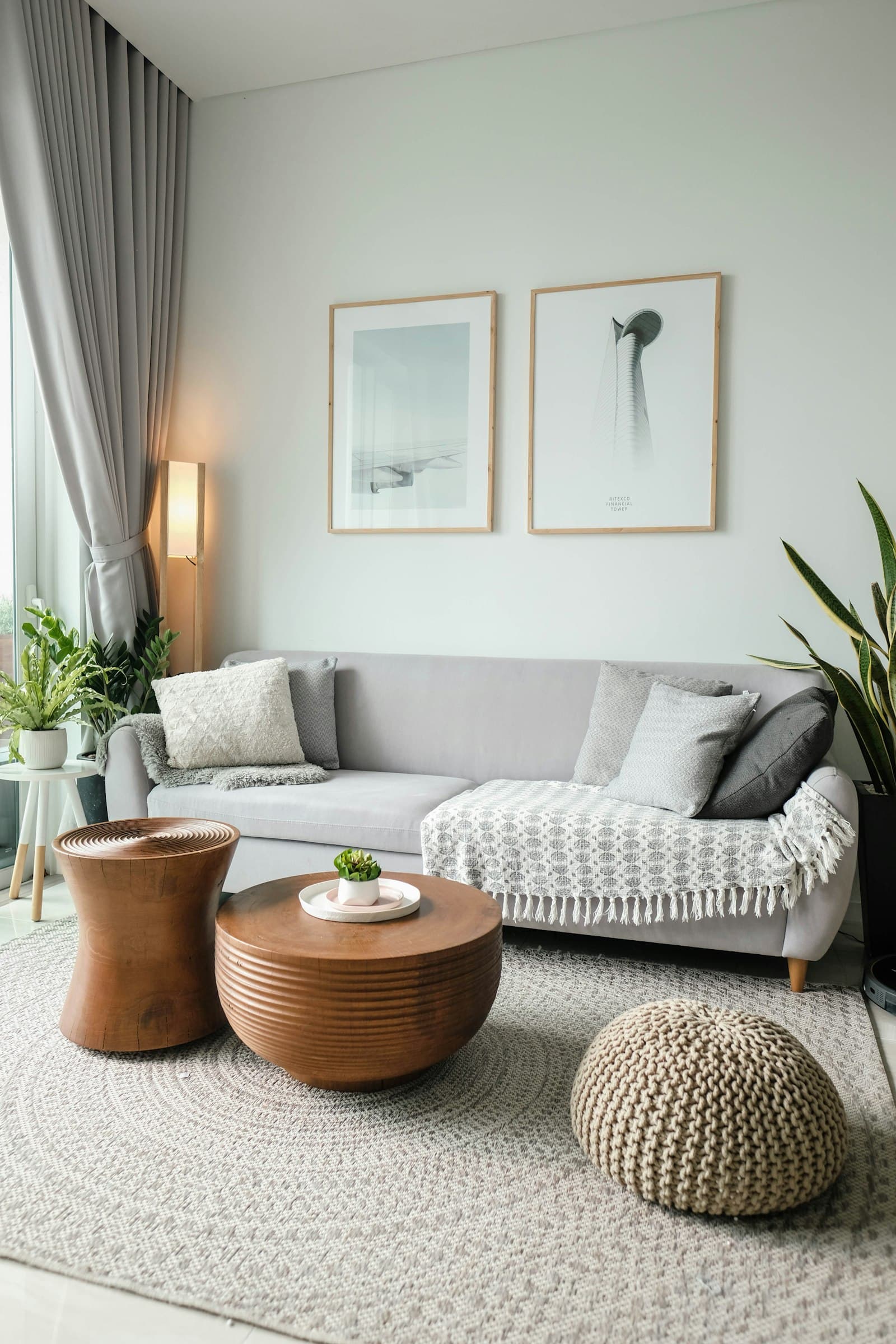
Art Nouveau interior style gets confused with "modern" in the everyday sense almost more often than any other historical style is mistaken for its accidental namesake, even though the two share almost nothing. Art Nouveau — known as Jugendstil in Germany, Sezession in Austria, liberty in Italy, and simply "модерн" in Russia — has nothing to do with minimalism or technology; it's built around a flowing, "living" line borrowed from nature: a stem, a wave, the curve of a dragonfly's wing. The style took shape at the turn of the 19th and 20th centuries in the work of Victor Horta in Brussels, Hector Guimard in Paris, Antoni Gaudí in Barcelona and Fyodor Shekhtel in Moscow — everywhere solving the same problem: breaking away from the right angle and borrowed classical ornament to invent a decorative language of its own, rooted in the plant world. Here's what the style is actually built from, and how to bring its shapes into a modern flat without turning it into a museum.
Art Nouveau interior style: what it actually is
Art Nouveau was the first truly unified style, where the architect designed not just the walls but the door handle, the window frame, the light fixture and the parquet pattern as parts of one image. At its core is the "whiplash" line — an asymmetric, flowing curve borrowed from a lily's stem or a silhouette, not drawn with a compass and ruler. Where Art Deco interior style chooses a sharp zigzag and symmetry, Art Nouveau chooses a soft, slightly wilful curve — the two styles sit next to each other on the timeline but speak opposite languages: one is the confident geometry of the industrial age, the other the natural form that came just before it.
Where Art Nouveau came from
The style earned different names in different countries in the same era — art nouveau in France and Belgium, Jugendstil in Germany, Sezession in Austria, liberty in Italy, and simply modern style in Russia — but the point everywhere was the same: to move away from exact repetition of historical orders toward a new, "living" ornament. In France the style is tied to Hector Guimard's wrought-iron entrances for the Paris Métro; in Barcelona, to Antoni Gaudí's façades, Casa Batlló among them; in Moscow, to the Ryabushinsky Mansion by architect Fyodor Shekhtel, where the staircase, the stained glass and the door handle were all designed as one sculpture. Art Nouveau was the last style that tried to fuse architecture and applied art into a single coherent image, before the 20th century turned toward functional simplicity and the right angle.
Key traits of Art Nouveau
- A flowing, asymmetric line — the "whiplash" curve instead of the right angle and strict symmetry.
- Botanical and natural motifs — stems, irises, water lilies, dragonfly wings in ornament and decor.
- Stained glass — window and door inserts, lamp shades with a botanical pattern.
- Wrought iron — staircase railings, door grilles and window frames treated as decor in their own right.
- Unity of detail — hardware, parquet, mouldings and furniture designed in one consistent form language.
- A muted, "natural" palette — olive, mustard, mauve, deep green rather than sharp contrasts.
Materials and palette of Art Nouveau
Art Nouveau materials are chosen not for shine but for their ability to hold a flowing shape: bent wood, wrought iron, matte coloured glass, ceramic tile with a botanical pattern. Wood is usually toned in warm, slightly muted shades and polished without a hard gloss — in this style, sheen almost always comes from glass and metal rather than from lacquer. The palette is built on natural, "marsh" tones — olive, mustard, iris mauve, deep bottle green — against which a single accent stained-glass panel or lamp shade reads brighter than an entire wall of saturated colour. Sharp contrast and glossy high-tech surfaces are foreign to Art Nouveau: everything in it aims for a soft transition rather than a hard edge.
Art Nouveau doesn't paint ornament onto a wall — it makes the wall itself, the staircase and the door handle move to the same flowing rhythm.
Art Nouveau in the hallway and living room
The entrance hall and staircase are where Art Nouveau historically showed itself most clearly: wrought-iron railings with a botanical pattern, a stained-glass panel above the door, a lamp with a coloured-glass shade by the mirror. The layout logic for such a space is covered in the piece on hallway interior design — Art Nouveau sits well in an entrance hall with a staircase or a high ceiling, because the style's own form language is built for the vertical and for a slow upward sweep of the eye. In the living room, a similar principle of a single focused accent applies: rather than covering every wall in ornament, choose one strong element — a tiled fireplace, a floor lamp with a stained-glass shade, a sofa with a curved back — and keep a calm, muted backdrop around it. Lighting in Art Nouveau is almost never flat and overhead — more on such lighting scenarios in the piece on lighting design for an interior.
Common mistakes when styling Art Nouveau
- Confusing Art Nouveau with contemporary minimalism — it's a historical decorative style from the early 20th century, not a synonym for "modern".
- Plastic imitations of stained glass and wrought iron — the fake texture reads instantly and undermines the whole effect of the style.
- Ornament on every surface at once — a botanical pattern works as an accent, not as wallpaper covering the entire room.
- Mixing in hard high-tech lines with no transition — a sharp contrast breaks the flowing form that Art Nouveau exists for in the first place.
Art Nouveau interior style works where a flowing line, botanical ornament and coloured glass come together in one coherent, deliberate image, rather than being scattered around a flat as separate souvenirs. Anyone who wants to build that kind of coherent logic for their own home — from layout through to finishes and lighting — should look at the "Home of Your Dreams" course, which walks through the path from idea to realisation step by step.