2026 Interior Design Trends
2026 interior design trends — warm restraint replacing cold minimalism, textured materials and deliberate color accents: what's worth bringing into a real project and what isn't.
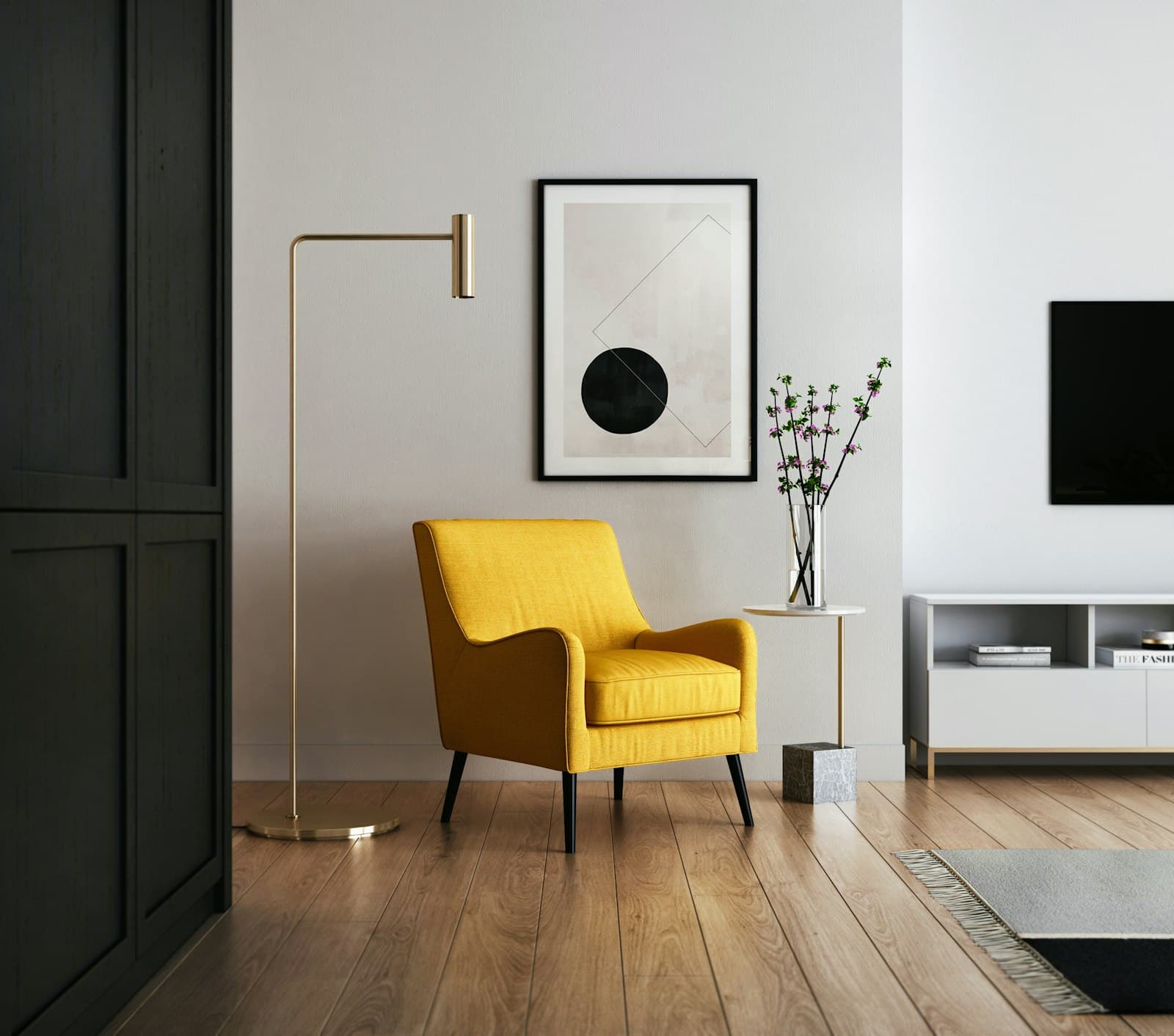
Every January the interior design industry promises a revolution: new colors, new shapes, new "must-have" solutions. In practice, interior design trends for 2026 aren't a language change from scratch, but a refinement of what has already taken hold over the past few years: a pull toward warmth, a move away from excessive minimalism, and growing interest in materials that age gracefully instead of just looking new on handover day. Figuring out which of these directions make sense for a specific apartment, and which will stay a fashionable image in a feed, is the task facing anyone planning a renovation this year. Some of these trends are driven not by aesthetics but by real circumstances: rising prices for certain materials, the availability of local production, and how much time families now spend at home.
2026 Interior Design: From Cold Minimalism to Warm Restraint
The main shift of the year is a move away from pointedly cold, almost clinical minimalism toward a restraint that doesn't give up on warmth. White and grey surfaces remain the foundation, but they're increasingly diluted with natural wood, linen textiles and handmade ceramics — materials with texture and slight imperfection. This isn't a rejection of the modern style in interior design as such, but its maturing: the same clean lines, without the feel of an uninhabited showroom.
Materials and Textures That Set the Tone
- Natural stone with pronounced texture — instead of a smooth artificial equivalent, especially on kitchen islands and in bathrooms.
- Microcement and plaster wall finishes — instead of large-format tile where surface continuity matters.
- Woven and textile elements — armchairs, lamps and panels that bring handmade craft back into the interior.
- Matte brass and dark bronze in hardware and fixtures — a warm alternative to chrome and polished steel.
Japandi and Calm Hybrid Styles Hold Their Ground
Among stylistic directions, Japandi — a hybrid of Japanese restraint and Scandinavian functionality — remains the most resilient, gaining ground rather than losing it in 2026. Its strength is that it isn't tied to specific decor that quickly dates, but built on principles: few objects, each chosen deliberately, natural materials and thoughtful lighting instead of bright accents. The same logic applies to other calm hybrid styles — they change more slowly than decorative trends because they rest on a principle rather than a specific pattern or color.
Color: From a Neutral Base to Deliberate Accents
Another notable shift is the gradual move away from a fully neutral palette toward one or two saturated accents against a calm base. It might be a deep terracotta or olive sofa in a light living room, a navy kitchen island, or a mustard armchair by the window — a detail that holds attention without turning the space into a kaleidoscope. This approach demands more taste and planning than either a fully neutral interior or, conversely, maximalism: the accent color needs to be chosen once and carried across several surfaces, not scattered across random objects.
Light as Part of the Architecture, Not Decor
In 2026, lighting less and less often stays a single chandelier in the middle of the ceiling — instead, scenarios are designed: task lighting, ambient lighting, accent lighting for niches and shelves. This trend is, in practice, less about aesthetics than engineering — the placement of switches, lighting groups and dimmers needs to be planned at the working-documentation stage, not chosen at the end of the renovation. That's why lighting is increasingly discussed in the earliest meetings with a designer, rather than last, once the walls are finished and rewiring is too late.
The trend worth adopting isn't a specific color or material — it's a principle: fewer random decisions, more deliberate ones that outlive a single fashion season.
What Not to Copy Blindly From the 2026 Trends
- Overly specific decorative elements — what looks fresh in a photo quickly reads as "trendy for this particular year" rather than timeless.
- Abandoning storage entirely for the sake of visual emptiness — aesthetics without function doesn't hold up to daily life.
- Copying an interior wholesale from social media without adapting it to the real layout, natural light and floor area.
2026 interior design trends are best treated as a compass, not an instruction manual: they point toward a direction — warmth, texture, a deliberate accent — but the execution always depends on the specific apartment, its light and its area. For anyone figuring out how to choose their own direction without getting lost among the trends when planning a renovation from scratch, the "Home of Your Dreams" course walks through the whole path from idea to realization step by step.